





In Oman, roses hold a special place not only as a symbol of natural beauty but also as a key element in the hospitality traditions that define Omani society. Over generations, hospitality practices in homes and majlises have evolved, making the use of roses and their derivatives an integral part of welcoming guests. Visiting an Omani home is therefore a full sensory experience, reflecting both the warmth of Omani generosity and the depth of its traditions.
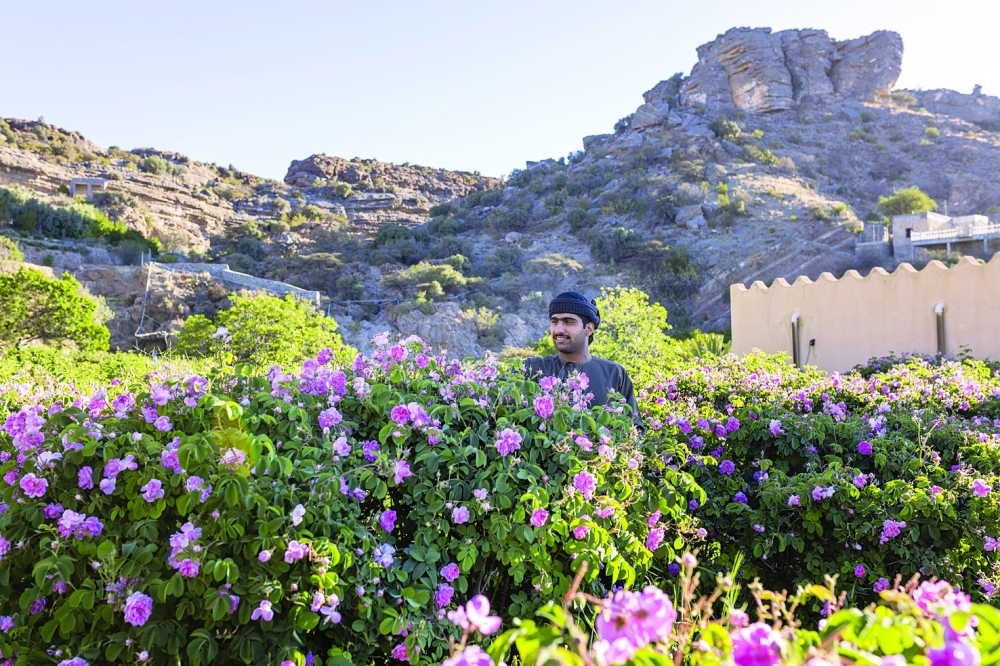
Certain regions of Oman, particularly Al Jabal Al Akhdhar, are renowned for cultivating Damask roses, known for their rich fragrance and dense petals. The rose season typically begins in late March and continues until mid-May, during which the flowers bloom across terraced fields in a breathtaking display of fragrance and pink hues. During this period, petals are harvested early in the morning to preserve their essential oils and are later used to produce traditional products such as distilled rose water, prepared through steam distillation to obtain a clear, aromatic liquid that retains its scent for an extended period.

One of the most prominent uses of roses in Omani hospitality is their addition to Arabic coffee. In Oman, coffee is more than a drink; it is a social ritual through which respect is expressed, with cups served one after another to guests as a gesture of welcome and friendship. Some hosts add a few drops of distilled rose water or rose petals during preparation or at the moment of serving, imparting a delicate fragrance that complements the coffee without overpowering it. This aromatic touch engages the senses and enhances the guest’s immersion in the local culture.
Roses are not limited to coffee alone; they are also used in traditional Omani sweets, which play a central role in hospitality during special occasions or family gatherings. Desserts such as halwa and various pastries are carefully prepared, often incorporating rose water to enhance flavour and add a subtle, pleasing aroma. Rose syrup or rose jam is sometimes used as a filling, giving the sweets a delicate balance of taste and fragrance, making the tasting experience more distinctive and memorable.
Another cherished Omani custom is offering distilled rose water after meals, not merely as a culinary ingredient but as a ritual for refreshment and perfuming. In many majlises, rose water is presented for guests to sprinkle on their hands after enjoying coffee and sweets, providing a sense of freshness and cleanliness while expressing respect and appreciation. Some households use traditional tools such as a marash to lightly spray rose water on the hands, while others provide small vessels that guests can use according to their preference.
Beyond its symbolic and aesthetic value, Omani roses and rose water are also appreciated for their soothing properties. The natural fragrance can calm the senses after a rich meal of coffee and sweets, offering a general sense of comfort. Consequently, rose water in Oman is not only used for culinary purposes but also for personal care, such as skincare and revitalisation after sitting in the majlises for extended periods.
What distinguishes Omani culture is the balance between preserving heritage and creatively using natural resources. In Oman, roses are not merely admired for their beauty; they are woven into daily life, becoming a defining element of the hospitality experience. As a visitor leaves an Omani home after a coffee gathering, the memory of coffee infused with rose, delicately scented sweets and a refreshing spritz of rose water lingers, capturing the essence of Omani warmth and hospitality. These small gestures embody the authentic spirit of generosity and welcome that lies at the heart of Omani culture.

Oman Observer is now on the WhatsApp channel. Click here


